
Gov. Newsom Signs Bill Requiring Large Corporations to Disclose Profits From Chattel Slavery
Antonio Ray Harvey | California Black Media
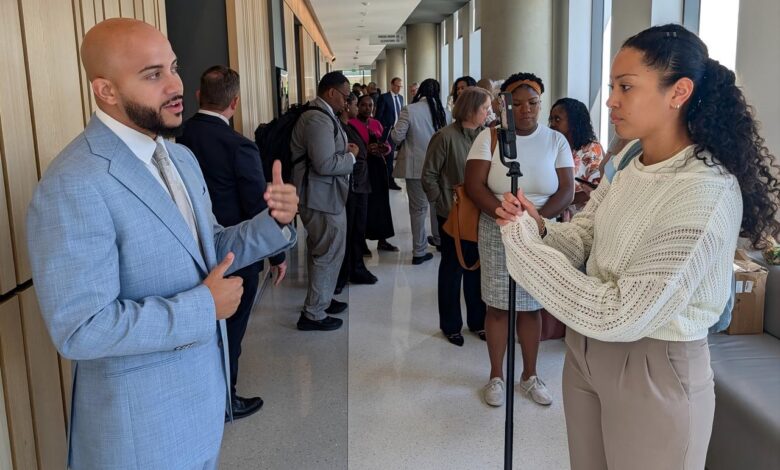
Assembly Bill (AB) 2599, the Truth in Disclosure Act, authored by Assemblymember Isaac Bryan (D-Ladera Heights), was signed into law by Gov. Gavin Newsom, making California the first state in the nation to require large corporations to disclose historical and financial ties to chattel slavery.
Qualifying businesses must submit findings to the California Civil Rights Department via an affidavit under penalty of perjury. The first filings are due by Jan. 15, 2029.
Bryan told California Black Media (CBM) that Newsom waited until Sept. 30, the constitutional deadline, to sign AB 2599. But Bryan said, once he knew the bill would become law, his anticipation eased.
“Yes, he waited until the last day because it’s a big bill, an important bill. It went down to the wire, but I think ultimately, we put a lot of pressure on him, and the governor knew it was the right thing to do,” Bryan said.
Under AB 2599, companies with annual worldwide gross receipts exceeding $100 million that existed — or whose predecessor entities existed — on or before Dec. 31, 1964, and historically profited from the slave trade must search their records for evidence of slavery-era commerce.
The California Civil Rights Department will compile those disclosures into a searchable public digital database, allowing academics, journalists, advocates and others to trace how corporate participation in the slave economy contributed to modern-day wealth.
“This is really important because we’ve had a lot of conversation about what public repair or redress should look like, but we haven’t had a lot of conversation about what private repair should look like,” Bryan said. “Part of the reason we haven’t had a conversation about what accountability or repair looks like is that we don’t know the extent to which that wealth has been generated. We know anecdotally, but the data hasn’t been disclosed publicly.”
The Alliance for Reparations, Reconciliation and Truth, or ARRT, and its coalition partners praised Newsom for signing the Truth in Disclosure Act into law.
About 44 organizations rallied behind ARRT’s campaign for the bill’s passage, including the California Black Power Network, Equal Justice Society, LA Voice, Faith in the Valley and Faith in Action East Bay.
ARRT, a multiracial, multisector coalition of organizers, advocates, policy experts and community leaders, is dedicated to advancing a comprehensive approach to reparations for Black Californians. The organization views the public database as an important foundation for transparency and a step toward healing.
In an Oct. 1 statement to CBM, ARRT said “Corporations have a moral and ethical responsibility to conduct business practices in alignment with human rights, and it is critical that they acknowledge the financial benefit gained from historical ties to human trafficking and slavery. While we commend the Governor for these momentous steps forward, this is not the end of the fight for comprehensive reparations for Black Californians.”
Oakland-based civil rights attorney Don Tamaki, one of nine members appointed to California’s Task Force to Study and Develop Reparation Proposals for African Americans, also supports AB 2599.
Tamaki, who is Japanese American, said the legislation reflects specific recommendations in the task force’s final report. He called requiring corporations to disclose their historical ties under oath a “critical first step toward full accountability.”
“The final (reparations) report recites that though slavery ‘was our nation’s original sin,’ the Emancipation Proclamation did not bring an end to the atrocities and deprivation visited upon African Americans,” Tamaki said. “Our report tells the truth about history. AB 2599 tells corporations they also have to tell the truth.”